7 signs hail damaged your roof (even if it looks fine)
Hail bruises are hard to spot from the ground. Here is what to look for after a Front Range storm and when to call for a free check.

Jenna Morales
July 16, 2026 · 6 min read
After a big Front Range hailstorm, the first thing most homeowners do is look up at the roof from the driveway. It usually looks fine. That is exactly the problem. Hail damage on asphalt shingles is often invisible from the ground, and it can take a year or more to show up as a leak. By then, your claim window may be closing. Here are seven signs to check safely from the ground and the attic, plus what a professional looks for on the roof.
1. Dented gutters, downspouts and vents
Soft metals are the best storm recorders on your property. Walk around the house and look for round dents in gutters, downspout elbows, window wraps and roof vents. If aluminum is dented, the shingles above likely took hits too. Photograph what you find with a coin next to the dent for scale.
2. Granules piling up at downspout exits
Shingle granules protect the asphalt from UV. Hail knocks them loose. A handful of granules is normal on a new roof, but a sudden pile of dark sand at the bottom of downspouts after a storm is a strong clue.
3. Spatter marks on siding, decks and fences
Hail cleans off grime where it strikes, leaving light circular marks on painted surfaces, grills and fence boards. The size of the spatter hints at hailstone size.
4. Damaged screens, siding and outdoor furniture
Torn window screens, cracked vinyl siding and dented patio furniture all point to hail large enough to bruise shingles.
5. Neighbors getting roofs inspected
This is not scientific, but it is useful. If several homes on your street have inspection trucks or new roof permits after a storm, your roof was in the same hail path.
6. New water stains or damp insulation in the attic
On a dry day after the storm, take a flashlight into the attic. Look for dark spots on the underside of the decking, around nails and at penetrations like vent pipes. Fresh damp insulation is a clear warning sign.
7. Shingles that look shiny or dark in spots
From a second-story window, you may see small dark or shiny circles on the shingles where granules were knocked off. These are bruises, and they weaken the shingle mat underneath.
What a professional inspection adds
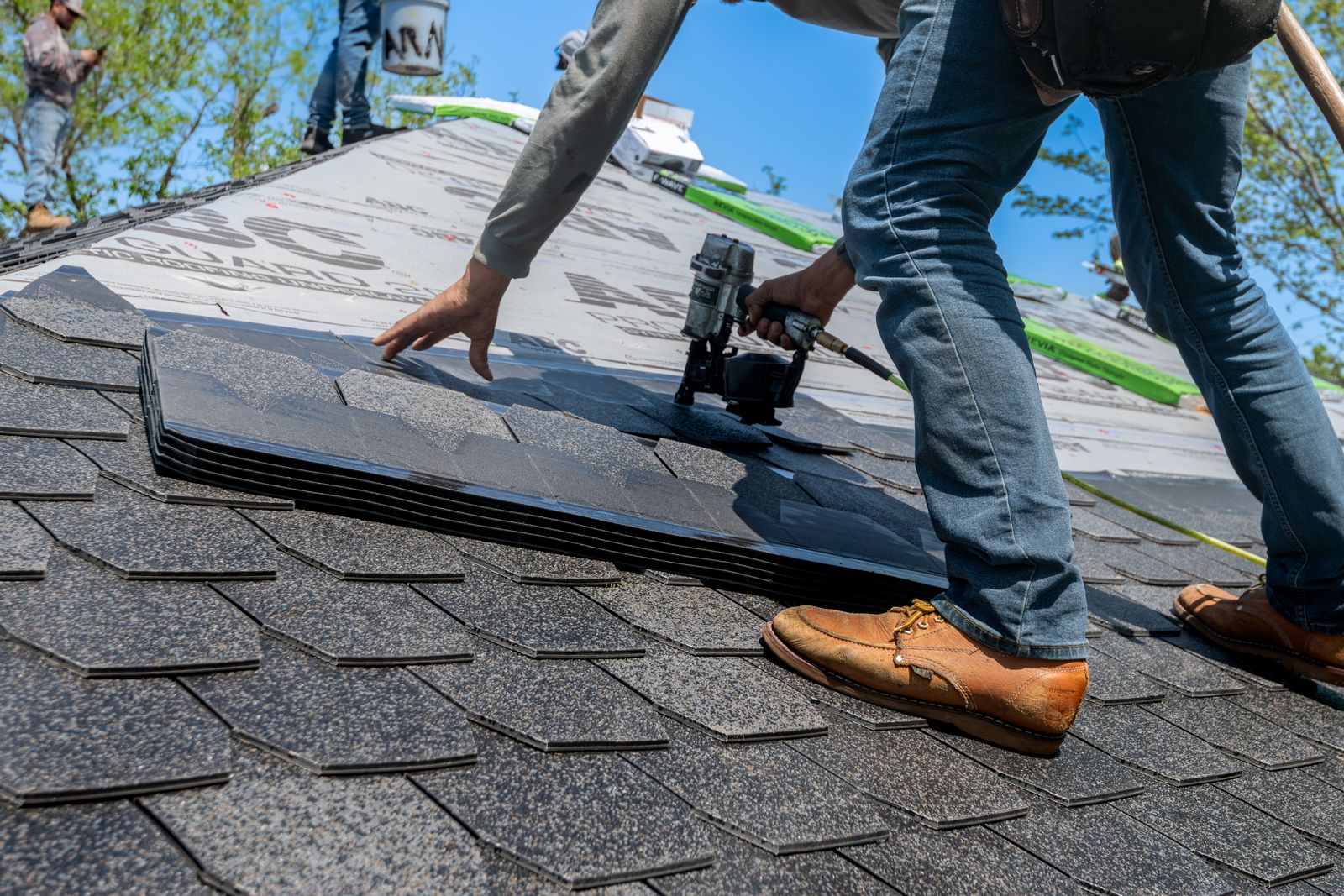
A roofer trained in storm documentation does more than glance at the roof. At Summit Peak, we mark 10 by 10 foot test squares on each slope and count hits inside them, because that is how most insurance adjusters evaluate damage. We check ridge caps, which often take the worst of it, and photograph every hit with chalk circles. We also note wind damage such as creased or lifted shingles, which is covered differently in many policies.
Should you file a claim?
Only if the damage is real and the repair cost clearly exceeds your deductible. Many Colorado policies now use a percentage deductible for wind and hail, such as 1 or 2 percent of your dwelling coverage. On a $600,000 home, that is $6,000 to $12,000. A free inspection gives you a straight answer and photo evidence before you call your insurer, so you are not filing claims for damage that will not be approved.
Do not climb up yourself
Walking a hail-damaged roof is dangerous, especially on steep pitches and after rain. It can also cause additional granule loss that muddies the evidence. Use binoculars, the attic and the ground checks above, then let a professional do the rooftop work.
If you spotted two or more of these signs, book a free storm inspection within a few weeks of the storm. Evidence is freshest early, and you will know exactly where you stand.
Storm and insurance lead. Former field adjuster. Knows exactly what documentation an insurance carrier needs to see.